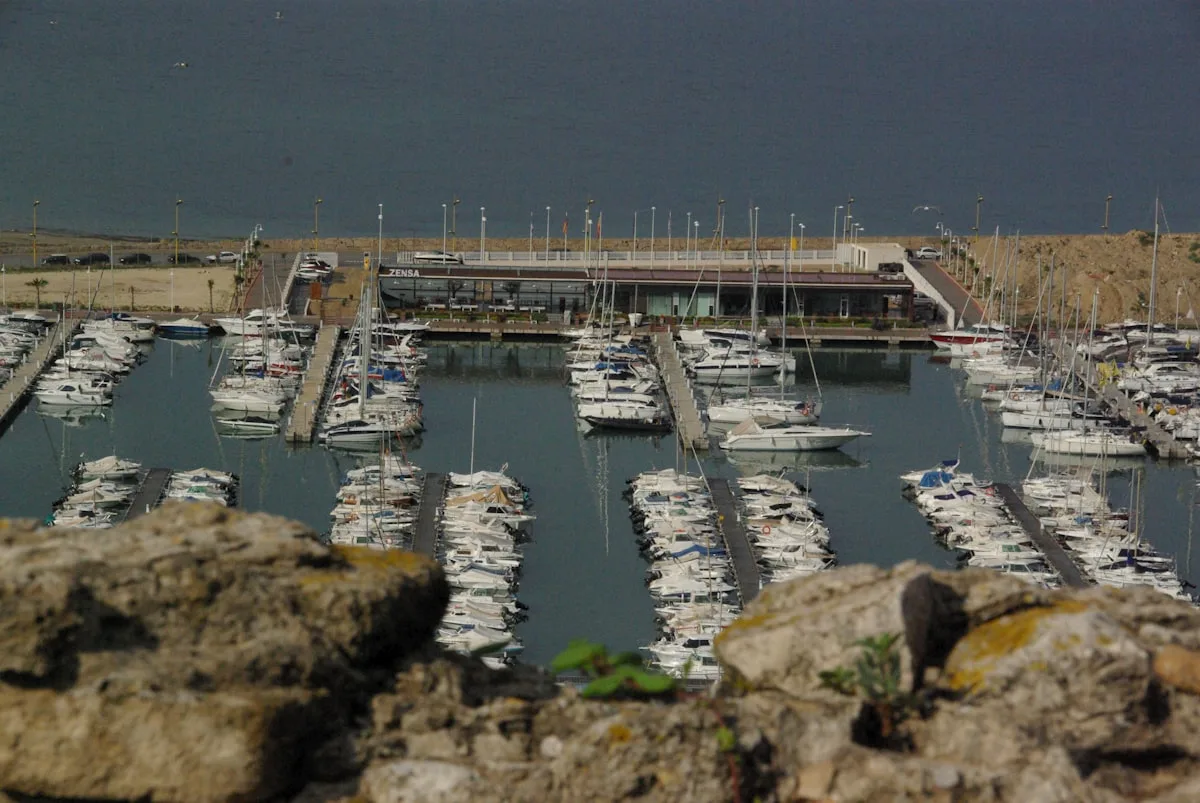
Denia is one of the few towns on the Costa Blanca where you can leave not just by road but by sea: Balearia ferries sail from here to Ibiza (roughly two to two and a half hours, depending on the vessel) and on to Formentera. If your route is a flight into Alicante followed by a ferry to the islands, that second leg runs on different rules than an ordinary transfer to a hotel. Here is what actually matters for getting the timing right.
How much buffer to build in at the port
Online check-in for Balearia opens 72 hours and closes 24 hours before departure, and it is worth doing from your phone in advance rather than queuing at the terminal counter with your luggage. Balearia itself recommends arriving at the port at least 90 minutes before departure for most sailings, and that buffer matters even more if you are traveling with a car or sailing in peak season (July and August), when the terminal gets noticeably busier. Even on foot with hand luggage only, do not treat that window as optional: boarding on some departures closes 30 to 45 minutes before the ferry leaves, and once it does you cannot get on board — unlike a flight, where a late arrival sometimes still makes the gate, a ferry simply departs on schedule and does not wait for anyone.
Where the terminal sits relative to the old town and the castle
The Balearia terminal is not in central Denia but about 1.5 km south of it, near the Plaza de Benidorm roundabout along Paseo del Raset — the old town is roughly a 15 to 20 minute walk from there along the waterfront. That matters if you are hoping to see something of Denia beforehand: with a generous buffer, an hour by the harbor or in a café near the terminal is easy to fit in, but walking up into the old town to the foot of the castle and back within an hour or so is cutting it close — most people need at least two hours for that round trip with any real time to look around. If you genuinely have two hours or more before your ferry, the climb up to the castle on the hill above town is worth it for the view across the bay to Montgo, but only plan it when the time is truly there to spare, not at the expense of making the boat.
Why the transfer is timed against the ferry, not against hotel check-in
This is the real difference from an ordinary tourist transfer: if a flight lands late and you reach the hotel an hour behind schedule, reception simply checks you in a little later — nothing is lost. A ferry does not work that way. If check-in for a 14:00 departure closes and you arrive at 14:05, the ticket is gone, and the next sailing can be hours away or, if that was the last ferry of the day, not until tomorrow. So the transfer needs to be timed not against the flight’s scheduled landing time but against what actually happens on the ground: immigration and baggage claim at Alicante airport, the drive itself (about 95 km on the AP-7, around 70 minutes without traffic, though it can run slower near Benidorm in season), and the recommended 90 minutes at the port. In practice that usually means booking the transfer with a 2.5 to 3 hour buffer before the ferry departs, not before the flight is due to land.
For trips with a fixed departure like this, a fixed-price transfer with a driver who tracks your flight number for free and adjusts the pickup time if it runs late works better than a taxi you cannot be sure will show up on time. Transfer Calpe drives from Alicante and Valencia airports to the port of Denia and back, as well as to other Costa Blanca towns such as Calpe and Benidorm, if you are staying there before or after the ferry. To get the pickup time set against your actual sailing, message us on WhatsApp or Telegram, or book through the booking form — we will work out the buffer and confirm the car in advance.